Bounded by three major highways, Milpitas is sometimes called “the Crossroads of Silicon
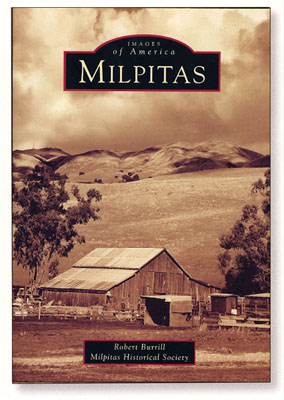
Valley.” Years before autos sped down its freeways, Milpitas was home to the Ohlone Indians, who lived among its picturesque foothills for hundreds of years. When the Spaniards settled California, Spanish padres used the area as a stopping point as they trekked between missions. During the 1900s, Milpitas served as a popular rest stop for travelers along the old Oakland-San Jose Highway.
Milpitas features excellent schools (all schools in the Milpitas Unified School District earned Academic Performance Index scores of 717 and higher), numerous neighborhood parks (a whopping 28), and major shopping centers (the Great Mall is the largest enclosed mall in Northern California). Perhaps the most important factor for the families who live here: Milpitas is one of the Bay Area’s most affordable communities, as well as one of the most livable cities in the country.
For these reasons and more, people come from distant lands to settle in Milpitas. A melting pot of sorts, the city boasts a rich cultural diversity that is quite evident in the community’s cultural offerings and its cuisines.
Most of Milpitas’ growth has occurred in the last 50 years. Milpitas didn’t become a city until 1954. Until then, Milpitas was an agricultural community of roughly 400 people. Although Milpitas means “little cornfields” in Spanish, the town’s main crops were hay and grain, and other products were grown for export and shipped to San Francisco and San Jose.
Shortly after Milpitas obtained cityhood, its much larger neighbor directly to the south, San Jose, threatened to envelope it. The town’s residents feared the loss of their rural lifestyle, and resoundingly voted against annexation in 1961. Ever since, Milpitas has proven it can stand on its own and provide for its residents. The city of Milpitas offers some of the best recreational programs in the South Bay, including aquatics, cultural arts and theater, sports leagues, youth programming, and senior activities and services.
Milpitas, however, couldn’t escape the tentacles of the Valley’s growth. Soon, technology replaced agriculture as the town’s primary industry, and the population swelled to its present 65,000. Today, Milpitas is home to more Fortune 500 companies than any other Bay Area city.
The city also lost a bit of its small-town feel, but has managed to retain a section called “Midtown,” the oldest part of Milpitas that has many historic residences. Milpitas has also protected its wilderness areas. The largest park is the 1,539-acre Ed R. Levin County Park, which features rolling hills and oak woodlands in addition to spectacular views of the valley floor and the San Francisco Bay. Hang gliders and paragliders soar from the top of the park’s Monument Peak, and dog owners walk their furry friends in the leash-free dog park.
So, the next time you’re on highway 880, 680, or 237, Milpitas is worth a stop—and perhaps you won’t ever want to leave.
DOWNLOAD THE “BEST PLACES TO LIVE” CHART